Endometriosis occurs when tissue similar to the lining of the uterus grows outside of the uterus, causing minimal to extensive fibrosis. The disease often adversely affects the functions of the reproductive organs, bowels, and bladder. It can also involve the kidneys. The primary involvement of the kidneys is very rare—kidney endometriosis is often secondary due to a condition called hydroureter (blockage of the ureters).
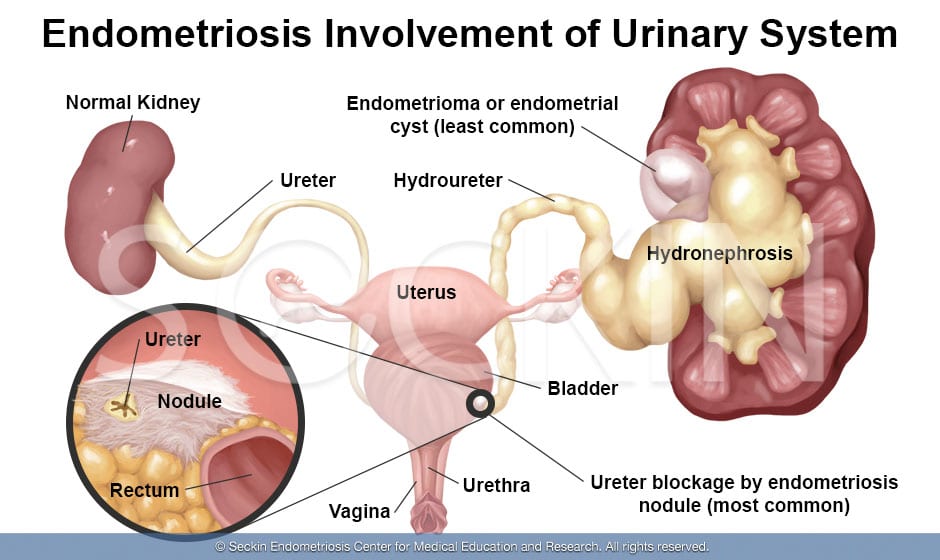
Kidney endometriosis is extremely rare, and there are only a few reported cases. However, increased endometriosis awareness could change this. The condition reportedly accounts for less than 1% of urinary tract endometriosis, which mostly affects the bladder and only accounts for 1.2% of all endometriosis cases.
Get a Second Opinion
Our endometriosis specialists are dedicated to providing patients with expert care. Whether you have been diagnosed or are looking to find a doctor, they are ready to help.Our office is located on 872 Fifth Avenue New York, NY 10065.
You may call us at (212) 988-1444 or have your case reviewed by clicking here.
Causes of kidney endometriosis
The exact cause of endometriosis is not clear, and it is even less clear why the condition sometimes affects the kidneys.
Endometrial lesions thicken and shed in response to the ebb and flow of sex hormones during a menstrual cycle. Researchers think that this sometimes leads to the formation of endometrioma or endometrial cysts in the kidneys. However, the exact cause is not clear. Some think that an overactive immune response may play a role in endometrial lesions infiltrating the kidneys.
With each menstrual cycle, more endometrial cysts accumulate in the kidneys. These cysts may invade the renal capsule, or the fibrous layer surrounding the kidneys, and cause pain. Blood clots may block the ureter and lead to renal colic, a type of kidney pain.
As the condition progresses, the endometrial cysts may even distort the shape of the kidneys and interfere with their normal function.
Symptoms of kidney endometriosis
Kidney endometriosis can be asymptomatic for several years. Doctors may discover it by chance while they are evaluating a patient for other conditions.
If a woman who has undergone surgery to treat endometriosis has ongoing urinary problems, it may suggest the presence of urinary tract or kidney endometriosis.
The following symptoms may suggest that a woman may have kidney endometriosis:
- pain in the lower back that co-occurs with a monthly menstrual cycle. That pain can also extend down through the legs.
- blood in the urine that co-occurs with the menstrual cycle
- difficulty urinating
- recurrent urinary tract infections
Diagnosis of kidney endometriosis
Most physicians are not familiar with endometriosis. As a result, they often misdiagnose patients with kidney cancer. This can lead to patients not receiving treatment on time, or receiving the wrong kind of treatment.
A specialist should carefully review the patient’s medical history, followed by a pelvic examination.
Tell-tale kidney endometriosis symptoms include lower back pain and blood in the urine that comes and goes with the menstrual cycle. Another sign of kidney endometriosis is when the patient’s symptoms disappear with hormonal treatment, such as birth control.
Imaging tests such as magnetic resonance imaging (MRI) scans or contrast-enhanced computed tomography (CECT) can also help visualize endometrial lesions in and around the kidneys.
However, the way to definitively diagnose kidney endometriosis is via histopathologic examination. This is the examination of kidney tissue that is obtained using a biopsy. However, this approach is very invasive and can lead to complications.
Treatment options
Kidney endometriosis can lead to kidney damage and even kidney failure if left untreated.
GnRH agonists and oral contraceptives may be used to manage the symptoms of kidney endometriosis, just like any other kind of endometriosis.
However, the best approach is to treat the condition by removing endometrial lesions with minimally invasive laparoscopic surgery. This should be performed by a team of surgeons specializing in gynecological, adrenal, and urological laparoscopic surgery as there is a high risk of complications including damage to the bowel, bladder, ureter, and the organs’ corresponding blood vessels.
Patient story
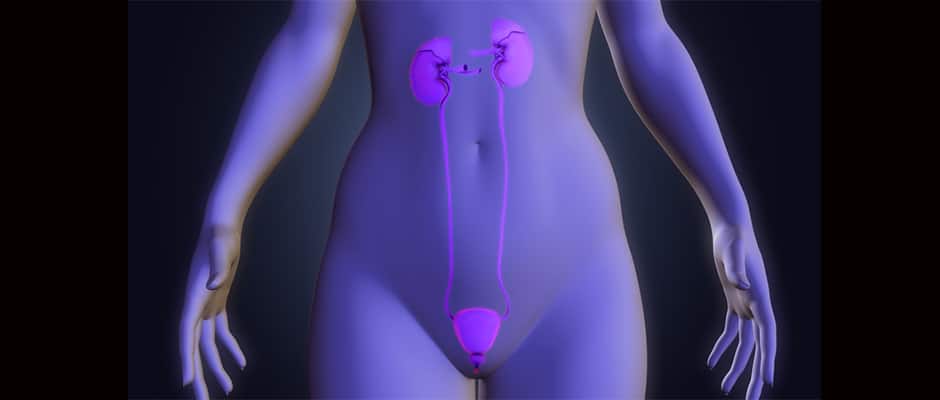
Although endometriosis typically infiltrates the reproductive organs, bowels, and bladder, the disease has other horrifying manifestations. Albeit rare, endometriosis can silently kill function in one or both kidneys. This is called ureteral endometriosis (endometriosis involving the ureters). If endo wraps around one or both ureters, it can cause swelling in the kidney and, left untreated, kidney loss.
Elina Kharnak is one of the unlucky few; in April, she was diagnosed with kidney endometriosis when it was already too late.
Get a Second Opinion
Our endometriosis specialists are dedicated to providing patients with expert care. Whether you have been diagnosed or are looking to find a doctor, they are ready to help.Our office is located on 872 Fifth Avenue New York, NY 10065.
You may call us at (646) 960-3080 or have your case reviewed by clicking here.

Dr. Seckin is an endometriosis specialist and women’s reproductive health advocate. He has been in private practice for over 30 years at Lenox Hill Hospital with a team of highly skilled personnel.
Dr. Seckin specializes in advanced laparoscopic procedures and is recognized for his expertise in complex cases of deep infiltrating endometriosis of the pelvis. He is particularly dedicated to performing fertility-preserving surgeries on cases involving the ovaries.
He has developed patented surgical techniques, most notably the “Aqua Blue Excision” technique for a better visualization of endometriosis lesions. His surgical techniques are based on precision and microsurgery, emphasizing organ and fertility preservation, and adhesion and pain prevention.
Dr. Seckin is considered a pioneer and advocate in the field of endometriosis.