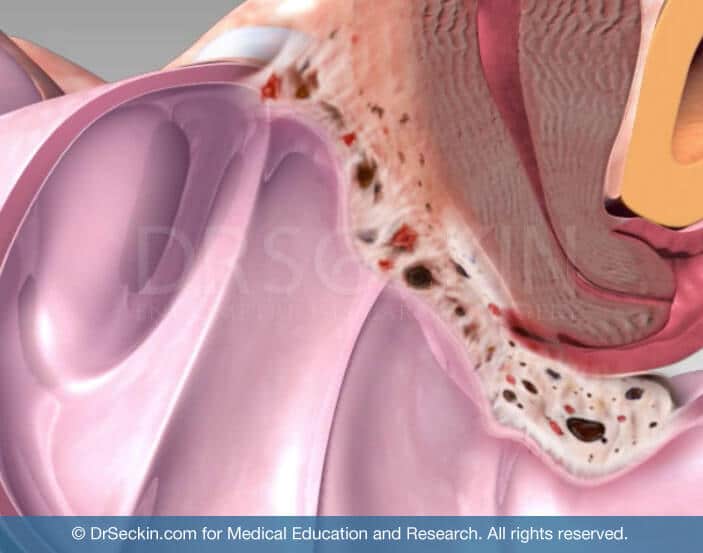
Deep infiltrating endometriosis occurs when endometrial tissue grows beyond the surface layers of the pelvic organs, often involving the ovaries, bladder, rectum, or bowel. This form of endometriosis causes severe pain, especially during menstruation, and can lead to fertility problems, painful bowel movements, and other digestive issues.
The tissue behaves like uterine tissue, thickening and shedding during the menstrual cycle, which causes inflammation and scarring. Treatment often includes hormonal therapy to manage symptoms or surgery to remove deep infiltrating tissue, depending on the severity of the condition.
What is die endometriosis?
DIE (deep infiltrating endometriosis) is a severe form of endometriosis where tissue grows deep into pelvic organs or structures.
This type penetrates more than 5 mm beneath the peritoneum, often affecting the bowel, bladder, uterosacral ligaments, or vaginal wall. DIE causes intense pelvic pain, painful intercourse, bowel and urinary symptoms, and sometimes infertility. It is considered more aggressive than superficial endometriosis and can significantly impact quality of life. Diagnosis typically involves MRI or transvaginal ultrasound, often followed by laparoscopy for confirmation.
Causes of DIE
When ovarian endometriomas become large enough and invade the wall of the ovaries, they begin to leak. They may even rupture. When this happens, the thickened blood, inflammatory enzymes, and other debris that these fluid-filled endometriomas contained spill onto other areas within the abdominal and pelvic cavity. The contents then adhere to these areas. Here, they begin to form the nodules and scar tissue that are characteristic of DIE.
Get a Second Opinion
Our endometriosis specialists are dedicated to providing patients with expert care. Whether you have been diagnosed or are looking to find a doctor, they are ready to help.Our office is located on 872 Fifth Avenue New York, NY 10065.
You may call us at (212) 988-1444 or have your case reviewed by clicking here.
Symptoms of deep infiltrating endometriosis
ThesSymptoms of deep infiltrating endometriosis include severe pelvic pain, especially during menstruation, and pain during sexual intercourse. Individuals may also experience painful bowel movements, constipation, or diarrhea, often worsening during their period. Other symptoms include fatigue, bloating, and lower back pain.
Some may also have difficulty with fertility due to scarring and adhesions. Deep infiltrating endometriosis can significantly impact daily life, causing discomfort and limiting mobility during flare-ups. The severity and specific symptoms can vary depending on the affected organs.

Treatment
The surgical treatment for DIE is the same as that for the frozen pelvis. It consists of minimally invasive techniques, also known as advanced laparoscopy.
FAQs
Does deep infiltrating endometriosis need to be removed?
Deep infiltrating endometriosis often requires removal, especially when it causes severe symptoms, such as chronic pain, bowel obstruction, or fertility issues. Treatment typically involves surgery to remove the endometrial tissue that has infiltrated deeply into surrounding organs like the bowel, bladder, or ovaries.
However, the need for surgery depends on the severity of symptoms and the extent of the condition. Hormonal therapies may also be used to manage symptoms and slow the growth of the tissue, but surgery is often the most effective option for long-term relief.
How painful is deep infiltrating endometriosis?
Deep infiltrating endometriosis can be extremely painful. The pain is often chronic and worsens during menstruation, sexual activity, or bowel movements. Individuals may experience intense pelvic pain, lower back pain, and pain in the abdomen, particularly when the endometrial tissue affects the bowel or bladder.
The pain can be sharp, stabbing, or cramp-like, and it may interfere with daily activities and quality of life. The severity of pain varies from person to person, but it is often considered one of the most debilitating aspects of the condition.
Is deep infiltrating endometriosis serious?
Yes, deep infiltrating endometriosis is a serious and aggressive form of the disease that requires expert medical attention. It occurs when endometrial tissue invades organs like the bowel, bladder, or ureters more than five millimeters deep.
This condition can cause severe chronic pain, organ dysfunction, and significant fertility challenges if left untreated. Unlike superficial types, it often “glues” pelvic organs together, creating a painful state widely known as a frozen pelvis. Surgery is frequently necessary to carefully remove these deep lesions and restore normal organ function.
What is the difference between endometriosis and deep infiltrating endometriosis?
The primary difference lies in the depth of tissue invasion and organ involvement. Standard endometriosis typically sits on the surface of the pelvic lining, while deep infiltrating endometriosis (DIE) penetrates more than five millimeters into the tissue.
This aggressive form often invades vital organs like the bowel, bladder, or ureters, acting like strong glue that binds them together. Unlike superficial lesions which are easier to treat, deep infiltration causes intense chronic pain and usually requires complex excision surgery. You can think of regular endometriosis as surface rust, whereas DIE represents structural damage that compromises organ function.
Get a Second Opinion
Our endometriosis specialists are dedicated to providing patients with expert care. Whether you have been diagnosed or are looking to find a doctor, they are ready to help.Our office is located on 872 Fifth Avenue New York, NY 10065.
You may call us at (646) 960-3080 or have your case reviewed by clicking here.

Dr. Seckin is an endometriosis specialist and women’s reproductive health advocate. He has been in private practice for over 30 years at Lenox Hill Hospital with a team of highly skilled personnel.
Dr. Seckin specializes in advanced laparoscopic procedures and is recognized for his expertise in complex cases of deep infiltrating endometriosis of the pelvis. He is particularly dedicated to performing fertility-preserving surgeries on cases involving the ovaries.
He has developed patented surgical techniques, most notably the “Aqua Blue Excision” technique for a better visualization of endometriosis lesions. His surgical techniques are based on precision and microsurgery, emphasizing organ and fertility preservation, and adhesion and pain prevention.
Dr. Seckin is considered a pioneer and advocate in the field of endometriosis.