Endometriosis and Cervical Stenosis
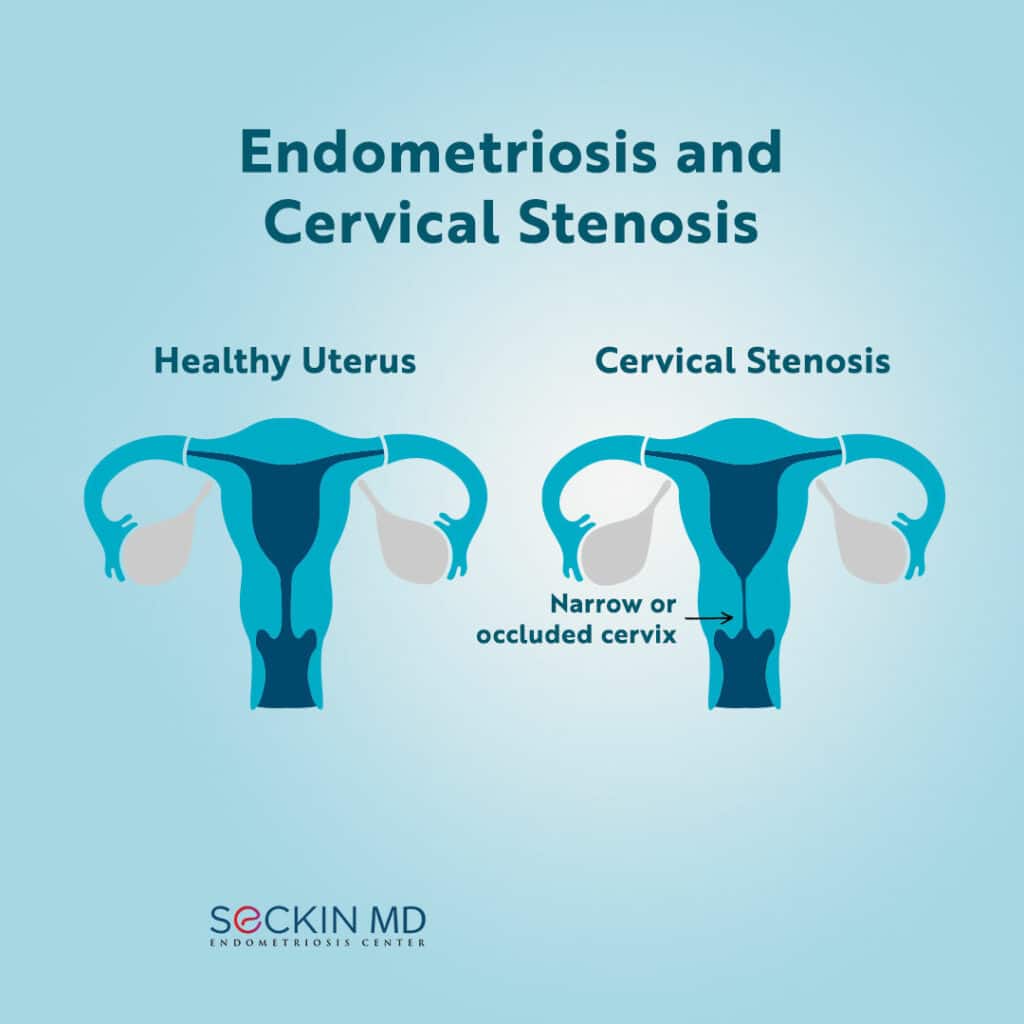
Cervical stenosis is a condition where the passageway of the cervix (the endocervical canal) becomes abnormally narrow or completely closed. This narrowing obstructs the flow of menstrual blood from the uterus to the vagina, often causing painful pressure buildup. It can also prevent sperm from entering the womb, leading to fertility challenges. While some women are born with it, it is most commonly acquired after procedures like LEEP or cryotherapy, which create scar tissue. In postmenopausal women, the cervix may naturally atrophy and shrink due to low estrogen levels.
What is cervical stenosis?
The cervix is part of the uterus that is the natural opening into the vagina. Cervical stenosis refers to the narrowing of the cervical os or opening. Reasons for this include genetic abnormalities, menopause, surgical trauma to the cervix (such as cervical conization or endometrial ablation), cancer, and radiation therapy.
Cervical stenosis is usually asymptomatic, especially in postmenopausal women. However, symptoms, if present, can include dysmenorrhea, amenorrhea, bleeding, and infertility in premenopausal women.
Doctors usually diagnose cervical stenosis if a 1mm to 2mm uterine probe cannot pass through the cervix.
Endometriosis and cervical stenosis
Cervical stenosis and endometriosis are distinct conditions that often aggravate each other dangerously. Stenosis narrows the exit for menstrual blood, significantly increasing the pressure inside the uterus. This blockage forces blood to flow backward into the pelvis through the fallopian tubes, known as retrograde menstruation.
Many experts believe this backflow delivers endometrial cells to the pelvic cavity, potentially seeding new lesions. Additionally, surgeries to remove deep endometriosis near the cervix can create scar tissue that causes stenosis. Both conditions combined result in excruciating, sharp cramps due to the intense internal pressure.
Is there a link between endometriosis and cervical stenosis?
There is no direct correlation between endometriosis and cervical stenosis. However, in a case study, 24 out of 25 women with chronic pelvic pain and cervical stenosis of the external cervical os also had endometriosis, based on a visual diagnosis.
Another cross-sectional study found that women with cervical stenosis of the internal cervical os and associated cervical factor infertility had a common diagnosis of endometriosis and polyps. However, a statistically significant correlation between cervical stenosis and other infertility risk factors could not be established.
Why does cervical stenosis happen?
Cervical stenosis may be congenital (present from birth) or acquired later in life. Authoritative gynecology references list several common acquired causes, including menopause, cervical surgery, endometrial ablation, cervical or uterine cancer, and radiation therapy.
Scarring and adhesions from pelvic infections or endometriosis are also discussed as contributors.
One of the most common real-world scenarios is stenosis after treatment to the cervix, such as excisional procedures performed for abnormal cervical cell changes.
Research literature shows the reported rates vary widely depending on the procedure type and definitions used, with ranges reported after conization and LEEP.
How cervical stenosis is confirmed?
Diagnosis usually starts with a pelvic exam and the story you tell. Clinicians often suspect cervical stenosis when they have difficulty passing instruments into the cervical canal and uterine cavity for testing or procedures.
A widely used diagnostic description is that complete stenosis is present if a very small probe, around 1 to 2 mm in diameter, cannot be passed into the uterine cavity.
Imaging can support the diagnosis when symptoms suggest trapped blood or fluid. For example, ultrasound may show a distended uterine cavity consistent with hematometra or other fluid collections, which helps link symptoms to obstruction.
One key point in clinical guidance is what happens next. If cervical stenosis causes symptoms or uterine abnormalities such as hematometra or pyometra, clinicians typically perform evaluation to exclude malignancy, including cervical cytology and endometrial assessment, then proceed with treatment.
Cervical stenosis and fertility
Cervical stenosis can affect fertility in a straightforward mechanical way: if the cervical canal is too narrow, sperm may have difficulty passing through the cervix.
There is also a broader fertility conversation around prior cervical treatments (for abnormal cells) and reproductive outcomes. Research reviews have explored links between cervical treatment history and time to pregnancy, suggesting potential impacts in some groups, although findings can vary by study and outcome measured.
The practical takeaway is that if you have had cervical procedures and are facing fertility challenges, it is reasonable to ask whether stenosis is part of the picture, especially if there are signs like difficult cervical access during exams or procedures.
Cervical stenosis and Samson’s theory of retrograde menstruation
Cervical stenosis may also explain Samson’s theory of retrograde menstruation. According to this, the menstrual effluent goes back into the reproductive tract, as there is nowhere else the blood can evacuate, leading to the increased likelihood of endometriosis forming. During hysteroscopy, surgeons typically perform cervical dilation to ease the passage of the probe through the constrained cervical opening.
Do you have cervical stenosis? Please do not hesitate to share your story if you wish by leaving a comment on our post on Facebook or Instagram.
Get a Second Opinion
Our endometriosis specialists are dedicated to providing patients with expert care. Whether you have been diagnosed or are looking to find a doctor, they are ready to help.Our office is located on 872 Fifth Avenue New York, NY 10065.
You may call us at (646) 960-3080 or have your case reviewed by clicking here.